Define safe.
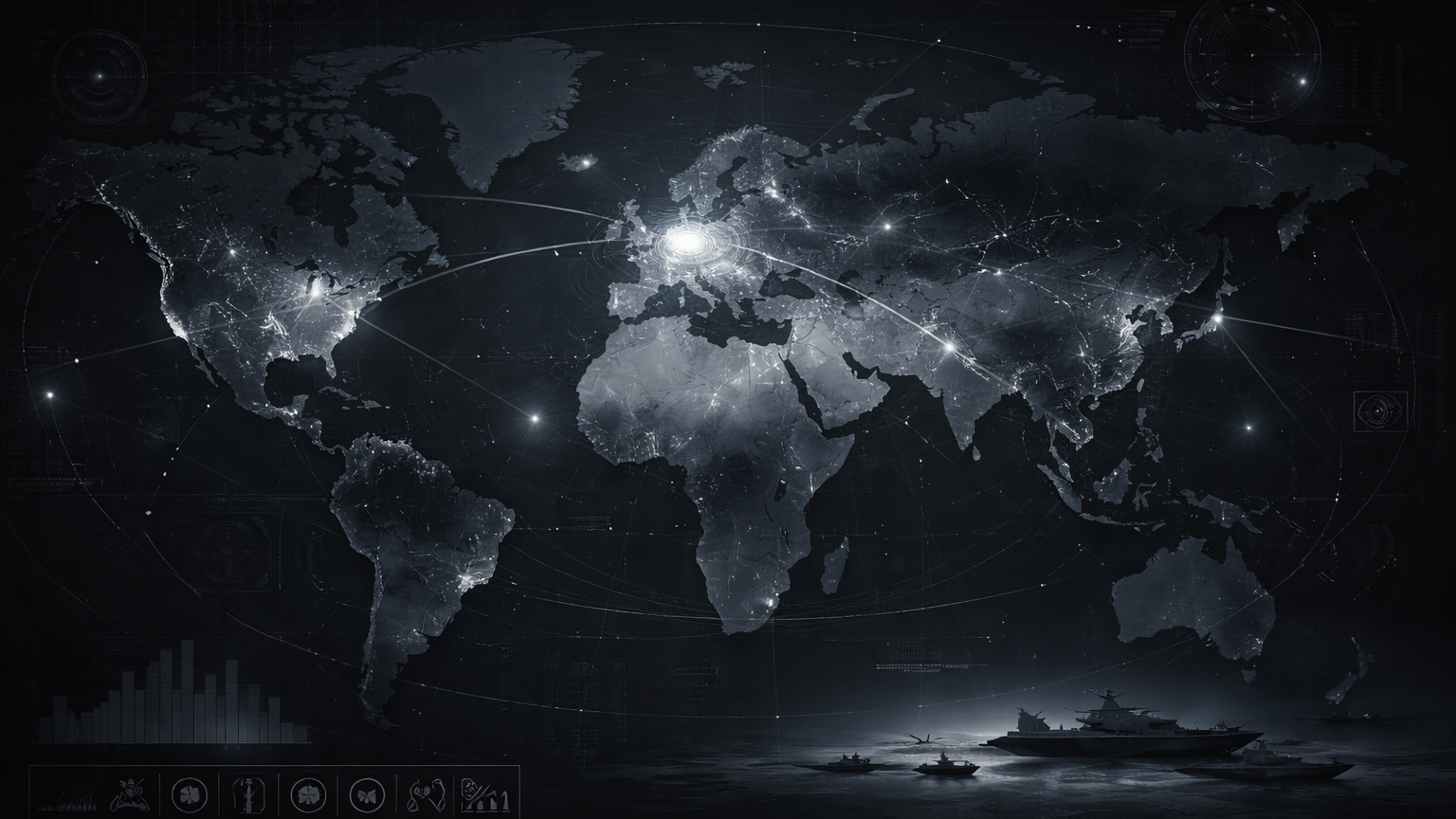
People love saying the world is “safer” after Iran was hit. Fine. Define safe. If energy chokepoints are under pressure, NATO is strained, hybrid warfare is rising, cyberattacks intensify and trust in institutions erodes, then no, the world is not safer. It is more brittle.
Today I had a conversation, not really in depth, but I pushed it there because of one superficial statement, which I so hate: easy populist answers to complex problems for small minds. “Now that Iran has been attacked, the world is much safer.” He just dropped it there, with no background in geopolitics, security, or any other relevant field. So instead of slapping him with all the arguments at once, I stayed calm and simply asked, “Define safe.”
People keep saying the world is safer now because Iran was hit and supposedly “stopped” from getting the bomb. That sounds decisive until you ask one simple question: define safer. Because if “safer” means reducing security to one single hypothetical weapon system, then maybe people can say that at the bar and feel strategic. But even on that narrow point, the story is sloppier than the slogan. Tulsi Gabbard’s March 2025 intelligence testimony said the U.S. intelligence community still assessed that Iran was not building a nuclear weapon. In March 2026, she said Iran’s enrichment programme had been “obliterated”, that there had been no effort to rebuild enrichment capability, and that the U.S. was still monitoring for any future signs of weaponisation (Gabbard, 2025; Gabbard, 2026).
At the same time, the IAEA later assessed that before the June 2025 strikes Iran had 440.9 kg of uranium enriched to 60%, which would be enough for roughly 10 weapons if further enriched. So no, Iran did not have a bomb. But no, that does not mean the issue was imaginary either. And the line that the June 2025 strikes simply “obliterated” the programme was never as clean as the chest-beating made it sound. Reuters later reported U.S. assessments that the strikes had degraded the programme rather than neatly erased it, while the IAEA kept pressing to account for the remaining stock and maintained that it had no credible indication of a coordinated Iranian nuclear weapons programme (Reuters, 2025a; Reuters, 2026a).
And I said...
Now zoom out, because real security is never one variable. Security is physical, digital, cognitive, economic and political. And on that broader map, the world does not look safer. Russia has normalised nuclear blackmail throughout the Ukraine war. Putin publicly revised Russia’s nuclear doctrine in 2024 to signal that even a conventional attack backed by a nuclear power could trigger a nuclear response. At the same time, NATO is not looking more solid but more strained, with Reuters reporting this week that Trump is weighing pulling some U.S. troops from Europe and that German Chancellor Merz publicly warned he does not want the alliance to split over the Iran war. That is not a safer strategic environment. That is a more brittle one (Reuters, 2026b; Reuters, 2026c).
And if we stay in the physical lane, the broader conflict picture is getting worse, not better. PRIO said that 2024 recorded 61 state-based armed conflicts across 36 countries, the highest number in more than 70 years. So when people pretend one theatre got “fixed” and therefore the world is safer, they are ignoring a global trendline that points the other way (Peace Research Institute Oslo, 2025).
Then take the hybrid picture in Europe. Researchers at CSIS documented 219 incidents of suspected Russian hybrid warfare in Europe between 2014 and 2025, with 46% of them occurring in 2024 alone. In a separate breakdown, CSIS found Russian attacks in Europe rose from 3 in 2022 to 12 in 2023 and 34 in 2024. NATO did not launch Baltic Sentry in January 2025 for decoration. It launched it after repeated incidents around critical undersea infrastructure. Reuters reported damage to a Latvia-Sweden fibre-optic cable in January 2025, and this week Britain said it had tracked Russian submarines near critical cables and pipelines in the North Atlantic to deter possible sabotage. So no, this is not paranoia. This is the European security environment adapting to repeated grey-zone pressure (Cancian, Ganz and Hwang, 2025; Thompson and McCabe, 2026; Reuters, 2025b; Reuters, 2026d).
In the digital lane, the pattern is the same. ENISA’s 2025 threat landscape says public administration was the most targeted sector in the EU, accounting for 38.2% of all identified incidents. It also noted that hacktivist-led DDoS attacks against digital infrastructure and services websites accounted for 57.5% of attacks on that part of the ecosystem. That matters because this is not just about stealing data anymore. It is about pressure, disruption, signalling and eroding confidence in the state’s ability to function (ENISA, 2025).
Then there is the cognitive lane, where people still underestimate how much damage is being done because there are no burning buildings to film. The EEAS said that in 2025, 10,500 social media channels and websites were mobilised to produce or amplify foreign information manipulation and interference, and that elections in countries including Germany, Poland, Romania, Moldova and the Czech Republic were targeted. In its assessment of activity through 2024, the EEAS had already identified over 500 incidents, across 25 platforms, involving at least 38,000 accounts, affecting 90 countries and targeting 322 organisations. That is not background noise. That is an operating environment (European External Action Service, 2026).
Oh yes, and then JD Vance was openly campaigning for Orbán ahead of the election, while pretending the real problem was the EU boycotting him. Reuters reported that in Budapest he openly backed Orbán and accused Brussels of meddling in Hungary’s election. So much for lecturing others about sovereignty and interference (Reuters, 2026e).
And what does that environment do over time? It hollows out trust. Freedom House says global freedom declined for the 20th consecutive year in 2025, with 54 countries worsening and only 35 improving. V-Dem says the world ended 2025 with 92 autocracies and 87 democracies, and that 74% of the world’s population now live in autocracies. In Europe, Eurofound says trust in the main national institutions has fallen by 13.4% on average since spring 2020, including a 24.5% drop in trust in national governments. OECD data also show trust in national parliaments averaging only 37% across surveyed countries. So when people say “we are safer,” I honestly wonder what universe they are measuring. Because in the real one, trust, democratic resilience and institutional legitimacy are all under pressure (Freedom House, 2026; V-Dem Institute, 2026; Eurofound, 2022; OECD, 2025).
Then the economic and mobility lane. The Strait of Hormuz is not a side issue. It is security. Reuters reported this week that traffic through Hormuz had fallen to less than 10% of normal, that only 7 ships had passed in 24 hours versus a normal 140, that around 230 loaded ships were stalled, and that the disruption had cut about 20% of global oil supply. Reuters also reported that shipping companies were warning traffic normalisation could take 6 to 8 weeks once the region stabilises. So anyone who says this conflict made the world safer needs to explain how a strategic chokepoint being throttled, energy infrastructure hit across the Gulf, and global supply stress count as improved security. They do not. They count as expanded vulnerability (Reuters, 2026f; Reuters, 2026g).
Europol has for years been working with Ukraine to mitigate the risk of arms trafficking into the EU, and in its 2025 threat assessment it explicitly warned that Europe must be ready for an increase in the smuggling of weapons and ammunition from Ukraine after the war. Back in 2022, Europol had already warned that the war could lead to an increase in firearms and munitions trafficked into the EU. But that is a strategic warning and a risk trajectory, not yet proof of a Bosnia-style flood on the European criminal market today. That distinction matters (Europol, 2022; Europol, 2025).
So my answer is simple. No, I do not think the Iran conflict improved the overall perception of safety, unless you define safety so narrowly that you almost deliberately miss the point. Remove one hypothetical future risk if you want, but if in the process you intensify energy insecurity, strain NATO, normalise great-power coercion, leave the broader conflict trend rising, keep cyber and hybrid pressure high, and allow information warfare to keep corroding public trust, then you have not made the world safer. You have just made the threat picture more complex while giving people a false sense of closure.
And that, precisely, is why superficial narratives are so dangerous. They are strategically childish, politically useful and cognitively seductive.
References
Cancian, M.F., Ganz, S. and Hwang, H. (2025) ‘Russia’s shadow war against the West’, Center for Strategic and International Studies, 18 March.
ENISA (2025) ENISA Threat Landscape 2025. Heraklion: European Union Agency for Cybersecurity.
European External Action Service (2026) 4th EEAS Report on Foreign Information Manipulation and Interference Threats. Brussels: EEAS.
Europol (2022) ‘Europol statement on the cooperation with Ukraine’, 22 July.
Europol (2025) The Changing DNA of Serious and Organised Crime: EU-SOCTA 2025. The Hague: Europol.
Eurofound (2022) ‘Trust in national institutions is falling: Data behind the decline’, 25 July.
Freedom House (2026) Freedom in the World 2026: The Growing Shadow of Autocracy. Washington, DC: Freedom House.
Gabbard, T. (2025) Opening statement for the SSCI as prepared on the 2025 Annual Threat Assessment of the U.S. Intelligence Community. 25 March.
Gabbard, T. (2026) Opening statement before the Senate Select Committee on Intelligence on the 2026 Annual Threat Assessment of the U.S. Intelligence Community. 18 March.
OECD (2025) Government at a Glance 2025. Paris: OECD Publishing.
Peace Research Institute Oslo (2025) Conflict Trends: A Global Overview, 1946–2024. Oslo: PRIO.
Reuters (2025a) ‘Early U.S. intel assessment suggests strikes on Iran did not destroy nuclear sites’, 24 June.
Reuters (2025b) ‘Sweden opens sabotage probe into Baltic undersea cable damage’, 26 January.
Reuters (2026a) ‘Much of Iran’s near-bomb-grade uranium likely to be in Isfahan, IAEA’s Grossi says’, 9 March.
Reuters (2026b) ‘Trump weighs pulling some US troops from Europe amid NATO strains, official says’, 9 April.
Reuters (2026c) ‘Germany’s Merz: we do not want NATO to split over U.S.-Iran war’, 9 April.
Reuters (2026d) ‘UK says it deployed military to deter Russian submarines from attack on undersea cables’, 9 April.
Reuters (2026e) ‘Vance says EU is meddling in Hungary’s election as he backs Orban in Budapest’, 7 April.
Reuters (2026f) ‘Hormuz at near standstill as Iran warns ships to keep to its waters’, 9 April.
Reuters (2026g) ‘Hapag-Lloyd says a return to normal shipping will take 6-8 weeks once Middle East stabilises’, 8 April.
Thompson, C. and McCabe, R. (2026) ‘Enter Europe’s cyber deterrence’, Center for Strategic and International Studies, 10 March.
V-Dem Institute (2026) Democracy Report 2026. Gothenburg: V-Dem Institute, University of Gothenburg.